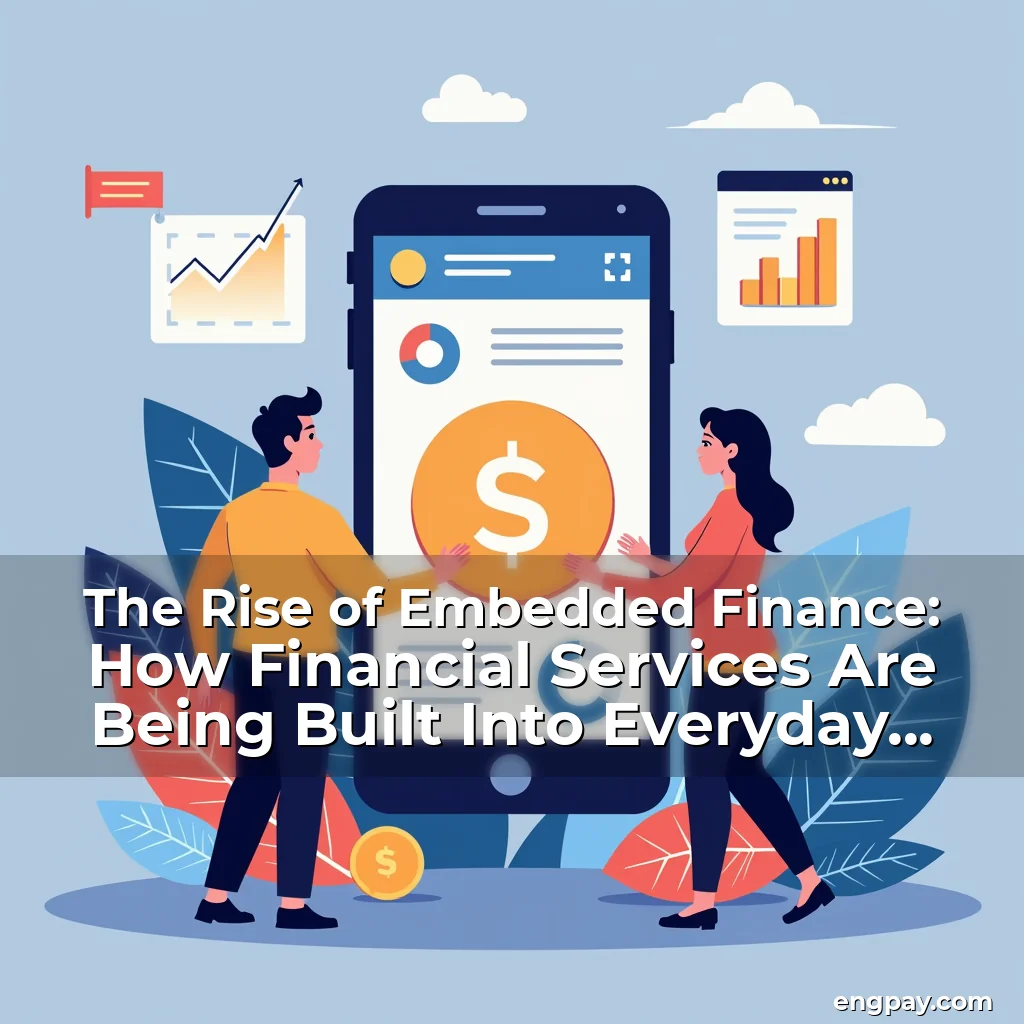
The Rise of Embedded Finance: How Financial Services Are Being Built Into Everyday Applications
In an era where technology is reshaping every industry, financial services are undergoing a profound transformation through the concept of embedded finance. This innovative approach integrates banking, lending, payments, and investment capabilities directly within non-financial platforms—allowing users to access essential financial tools without ever leaving their preferred apps.
The emergence of embedded finance has been fueled by advancements in fintech infrastructure, growing consumer demand for seamless digital experiences, and the need for businesses to offer holistic solutions to their customers. As we explore this phenomenon further, we’ll uncover how it’s redefining traditional finance models across industries.
Understanding Embedded Finance: A New Paradigm in Digital Transactions
Embedded finance refers to the integration of financial services into third-party applications or platforms that were not originally designed as financial institutions. Unlike conventional banks that operate as standalone entities, these services now exist within e-commerce sites, social media networks, ride-hailing apps, and even video game platforms.
This shift represents a fundamental change in how consumers interact with financial systems. Instead of navigating complex banking interfaces, users can perform transactions, manage accounts, apply for loans, and invest capital—all while using familiar applications they engage with daily.
Three key characteristics define embedded finance:
- Contextual relevance: Financial offerings are tailored specifically to the user’s activity within the host application, creating highly personalized experiences
- Seamless integration: Banking functions are woven seamlessly into existing workflows without disrupting normal usage patterns
- Real-time processing: Transactions occur instantly with minimal latency due to direct API connections between service providers and platform operators
The implications extend beyond convenience. By embedding financial tools within everyday applications, companies can create new revenue streams while providing value-added services to their users. For example, a food delivery app might allow instant payments, loyalty rewards redemption, and microloans for restaurant owners—all integrated within the same interface.
How Embedded Finance Works: The Technology Behind Seamless Integration
The foundation of embedded finance lies in robust Application Programming Interfaces (APIs) that enable different software systems to communicate efficiently. These APIs act as bridges connecting financial service providers with the host applications where their services will be embedded.
Financial institutions develop modular components such as payment gateways, credit scoring algorithms, and transaction processors which can be easily incorporated into various platforms. This modularity allows developers to customize financial features according to specific use cases without needing deep expertise in financial regulations or risk management.
Behind the scenes, secure data encryption protocols ensure sensitive information remains protected during transfers between applications. Advanced authentication methods including biometric verification and multi-factor security help maintain trust in these integrated systems.
A typical implementation involves several layers working together harmoniously:
- Data collection layer gathers relevant user information from the host application environment
- Risk assessment layer evaluates creditworthiness based on behavioral patterns and historical data
- Funding layer processes transactions through secure channels with real-time settlement mechanisms
- User experience layer presents financial options in contextually appropriate ways within the native application interface
Industry-Specific Applications of Embedded Finance
The versatility of embedded finance makes it applicable across numerous sectors, each benefiting uniquely from its integration. In retail, for instance, shoppers can now make purchases, receive instant financing offers, and track spending habits—all within the same shopping platform.
Healthcare providers leverage embedded finance to streamline patient billing, offer medical expense financing plans, and facilitate telehealth consultations with built-in payment options. This reduces administrative burdens while improving overall patient satisfaction.
Transportation services have adopted embedded finance extensively. Ride-sharing platforms integrate payment systems allowing passengers to pay fares automatically while drivers can access instant funding for vehicle maintenance or personal expenses.
Educational institutions utilize embedded finance solutions to provide students with tuition installment plans, scholarship disbursement systems, and career development fund management tools—all accessible through student portals.
Case Study: Embedded Finance in the Gig Economy
The gig economy provides compelling examples of embedded finance in action. Platforms like Uber and TaskRabbit embed payment systems that automate earnings distribution, tax calculations, and income tracking for independent workers.
These platforms often include instant payout features, allowing gig workers to withdraw funds immediately rather than waiting for weekly or monthly cycles. Some advanced implementations even provide access to small business loans based on verified work history and performance metrics.
According to a recent report by McKinsey & Company, over 60% of freelancers prefer platforms that offer embedded financial services because they simplify cash flow management and reduce reliance on external financial institutions.
The integration also benefits clients who may not have traditional bank accounts. By offering mobile wallets and alternative identification methods, gig platforms expand financial inclusion among underserved populations.
The Impact on Traditional Financial Institutions
The rise of embedded finance challenges established banks and financial institutions to adapt quickly to changing market dynamics. While some see it as a threat, others recognize opportunities for collaboration and innovation.
Banks are beginning to partner with tech companies to co-develop embedded financial solutions that maintain regulatory compliance while delivering enhanced customer experiences. This partnership model allows banks to retain control over core financial operations while leveraging technological advancements from fintech startups.
Certain traditional banks are transforming themselves into technology-driven enterprises, investing heavily in open banking initiatives that enable easier integration with third-party platforms. Others are exploring strategic acquisitions to gain access to cutting-edge embedded finance technologies.
Despite these adaptations, legacy institutions face significant hurdles related to outdated infrastructures, bureaucratic procedures, and resistance to cultural change. Overcoming these obstacles requires substantial investments in modernizing internal systems and fostering agile organizational cultures.
Regulatory Challenges and Compliance Considerations
As embedded finance continues to evolve, regulators around the world grapple with ensuring consumer protection while encouraging innovation. The decentralized nature of these services complicates oversight since responsibilities are distributed among multiple entities.
Compliance becomes particularly challenging when financial services cross international borders. Different jurisdictions have varying requirements regarding anti-money laundering (AML), know-your-customer (KYC), and data privacy protections that must all be addressed simultaneously.
To navigate this complex landscape, many embedded finance providers employ dedicated compliance teams specializing in regulatory affairs. They implement automated monitoring systems that flag suspicious activities in real time while maintaining transparent audit trails for authorities.
Governments and central banks are actively developing frameworks to regulate embedded finance responsibly. Initiatives like Open Banking directives in Europe aim to establish standardized rules that protect consumers while enabling fair competition among service providers.
Consumer Benefits and Risks Associated With Embedded Finance
Consumers benefit greatly from embedded finance through increased accessibility, improved efficiency, and greater transparency in financial transactions. Accessible financial services empower individuals who previously lacked traditional banking relationships to participate fully in the digital economy.
The convenience factor cannot be overstated. Users appreciate being able to complete financial tasks without switching applications, reducing friction and enhancing overall user experience. Real-time updates and instant notifications contribute significantly to better financial awareness and decision-making.
However, potential risks accompany these benefits. One concern relates to data security—the more deeply financial services are embedded into everyday applications, the greater the attack surface for cyber threats. Strong encryption standards and continuous security audits become critical safeguards against breaches.
Another challenge arises from potential conflicts of interest. When financial products are bundled with other services, there exists a risk that recommendations might prioritize commercial interests over genuine client needs. Transparent disclosure policies and strict ethical guidelines mitigate this issue effectively.
The Future Landscape of Embedded Finance
Predictions suggest that embedded finance will continue expanding rapidly in coming years, driven by increasing digitization trends and evolving consumer expectations. Emerging markets present especially promising growth opportunities as millions gain access to smartphones and internet connectivity.
Artificial intelligence and machine learning will play pivotal roles in shaping future developments. Predictive analytics could enhance personalized financial advice while blockchain technology promises to revolutionize transactional integrity and smart contract execution.
Sustainable finance initiatives may also find new expressions through embedded models. Green investment options could appear within popular lifestyle apps, making environmentally responsible choices more intuitive for average users.
As we move forward, successful embedded finance ecosystems will likely depend on striking the right balance between innovation and regulation. Creating inclusive yet secure environments that foster both economic empowerment and financial stability remains paramount.
Conclusion
The evolution toward embedded finance marks a paradigm shift in how financial services are accessed and utilized globally. It empowers individuals, enhances operational efficiencies for businesses, and creates new opportunities for financial inclusion worldwide.
For those seeking to harness the power of embedded finance, understanding current trends, staying informed about regulatory changes, and choosing reliable partners are crucial steps towards maximizing benefits while minimizing associated risks.